Set within the quiet folds of Teruel’s rolling landscape, the Hotel in the Landscape emerges as a striking example of eco-brutalism—an architectural language where concrete meets ecology, and raw form bends in respect to nature’s contours.
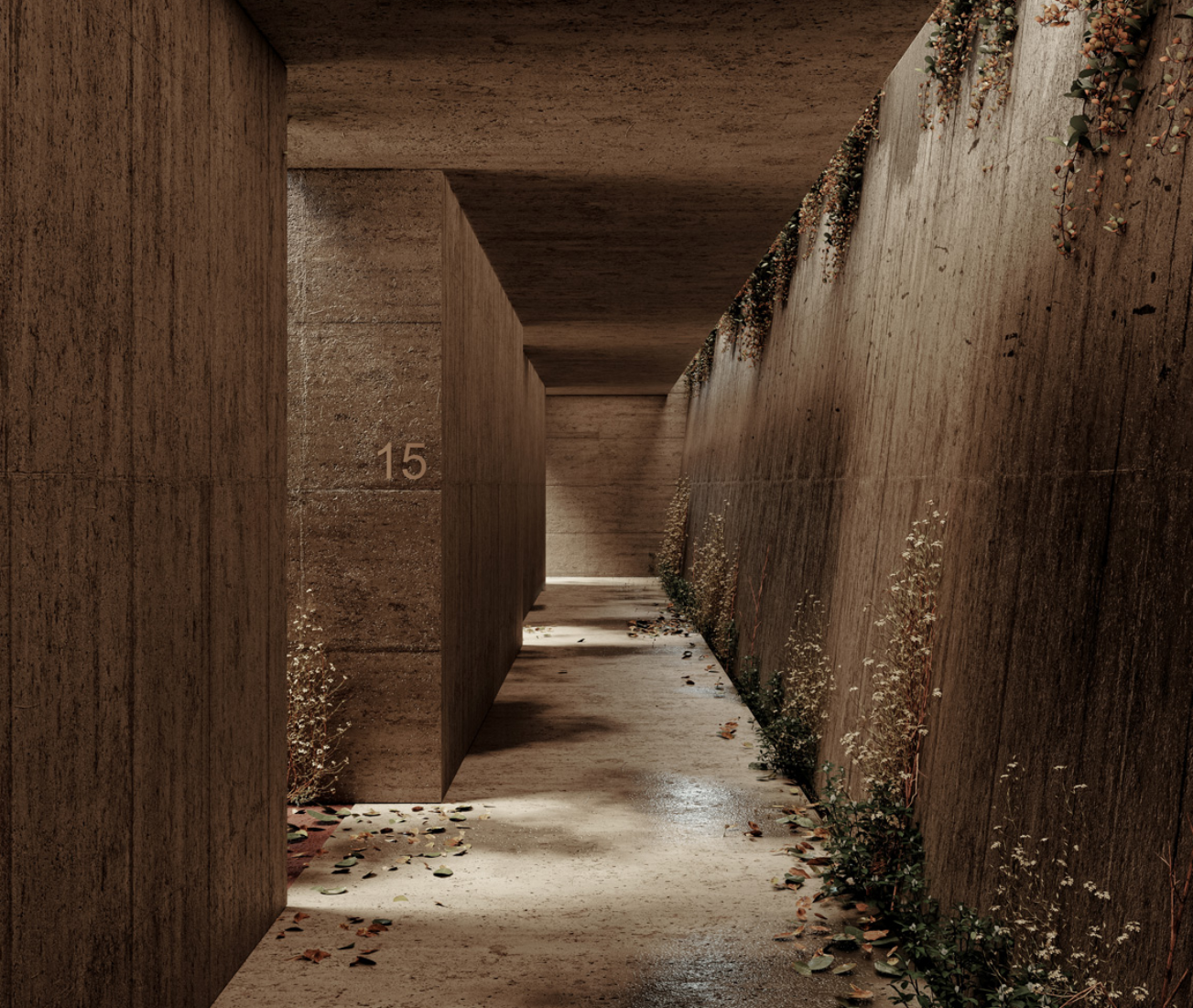
Unlike classical brutalism, which often asserts dominance over its context, eco-brutalism softens the edges of concrete with sensitivity to the environment. Here, the terrain itself dictates form. The hotel unfolds like terraced slopes, echoing agricultural patterns of the region. Its walls of stone and exposed concrete are not alien impositions but extensions of the ground, blurring the threshold between the built and the natural.
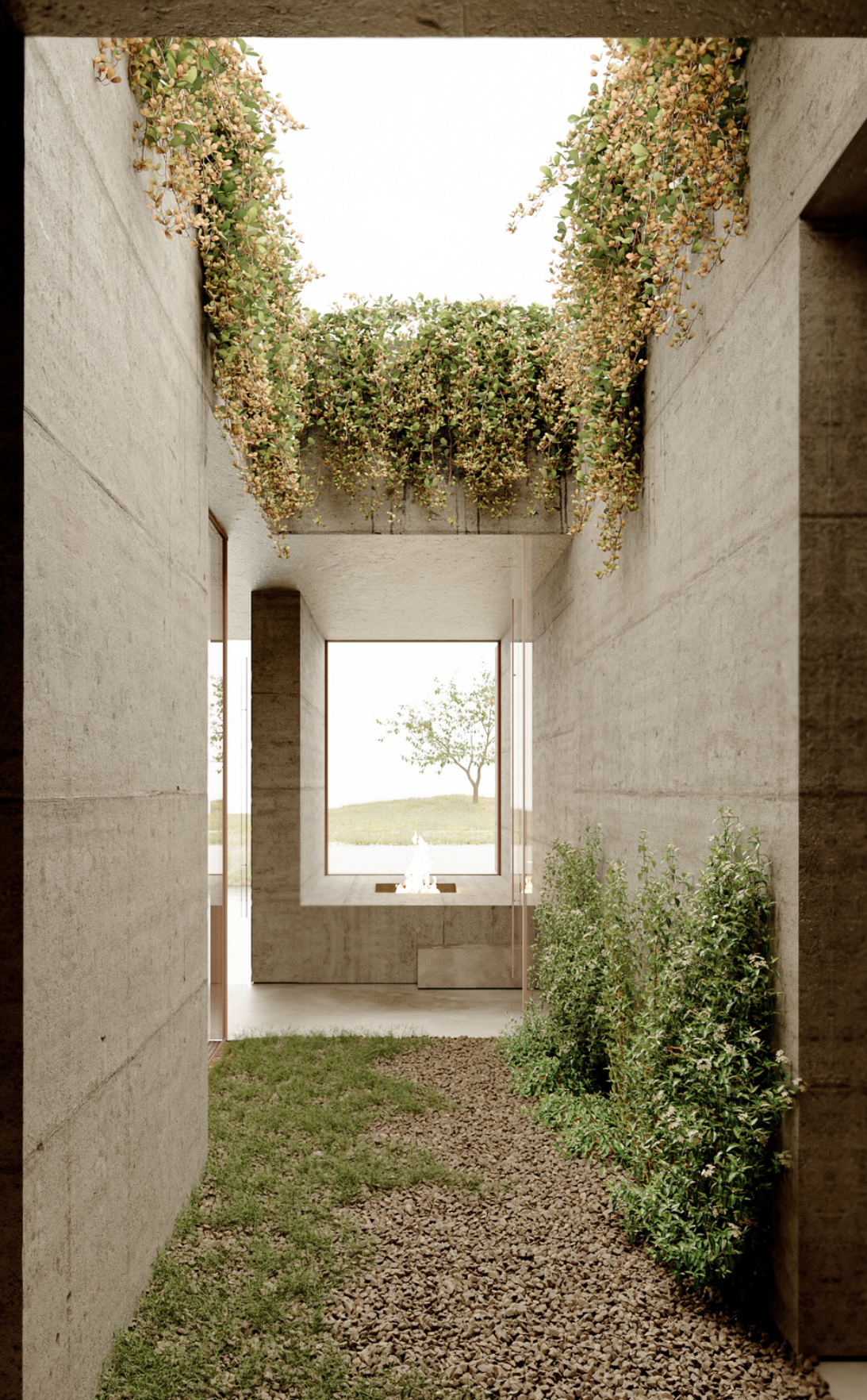
The design ethos goes beyond materiality: it creates an immersive ecological experience. Each guest room becomes a private sanctuary, opening to balconies that frame uninterrupted views of the forest. In these quiet openings, the brutalist mass reveals its gentler side, offering moments of intimacy within a structure of monumental presence.
Pathways weave through vegetation, linking courtyards, pools, and resting alcoves hidden among trees. These circulation routes resist rigid geometry, instead following the organic rhythm of the site. The result is a choreography of shadow, light, and foliage—an architectural promenade where guests encounter both crafted spaces and untouched pockets of nature.
Eco-brutalism here serves as an ideological stance: permanence without intrusion, monumentality with humility. The rawness of concrete and stone is offset by the living systems they frame—vegetation, water, sky. The architecture does not attempt to compete with the forest but to amplify it, becoming a vessel for ecological awareness.
More than a hotel, Hotel in the Landscape is an act of coexistence. It invites its visitors not only to inhabit space, but to inhabit the dialogue between architecture and environment, reminding us that the most radical buildings are not those that erase nature, but those that extend its presence.